Back to All Articles
Announcements, Category One
60 Years of Leading the Conversation
A note from Accounting Coordinator, Jane Young
“In the depths of my personal abyss, I received understanding and kindness and help from many individuals. People, I learned, can be very kind. I came to believe deeply in this — in people and the good that is in them.”
– Marty Mann, in her 1955 essay, This I Believe
I started working for the agency when we were known as NCADA, and I soon learned about Marty Mann. She had been a member of AA, and she founded the National Council on Alcoholism and Drug Dependence (NCADD) to educate her community and expand the conversation about alcohol use disorder. What I love about the quote above is Marty’s focus on people. It is fitting for our agency. Our staff has changed over the years, but the constant, from my perspective, has been the kindness and goodness of the people I’ve had the privilege to work beside. They are why I have stayed for nearly 28 years.
NCADD was our parent organization when we opened our doors in 1965. We have followed in Marty Mann’s footsteps, and 60 years later, PreventEd is leading the conversation on alcohol and other drugs. The agency’s longevity speaks to an enduring commitment to ground our programs and services in research and evidence-based information. But we are not simply a database of statistics and facts. That is why conversation is the key word in our tagline. We shape information into meaningful programs and services that offer those we serve a deeper understanding of their choices and their impact. In my job responsibilities, I’ve been behind the scenes, but I’ve seen how gifted our staff has consistently been in leading the conversation and encouraging others to continue this conversation in their day-to-day lives. I’d like to share a few of those stories.
“…words can actually change the way someone’s heart feels.” (from Words and Your Heart by Kate Jane Neal). Teddy (a teddy bear)
and Prickles (a porcupine) are a couple of our training partners who help us in our Winning Friendship program to teach kindergartners about the power of words. The lessons encourage students to use “teddy bear” words and actions. One teacher wrote that the program is “…an integral part of our classroom attitudes and behaviors all year long!” And so it goes with our prevention programming, which we began to offer to schools in 1980. Our prevention educators teach life skills that shape or reshape attitudes and behaviors, leading students to be more mindful of the choices they make. The choices of five-year-olds may be limited, but none are probably more important than the choice of their words. What better place to begin the prevention conversation than to visit a class of kindergarten students with Teddy and Prickles and explore how words and actions can change someone’s heart? It’s a lesson
I continually learn every day.
Changing someone’s heart can be difficult, but sometimes the messenger makes all the difference. Our TryPOD program trains junior and senior high school students as peer educators to teach freshmen and sophomores about the effects of binge drinking on the developing teen brain. Several years ago, we hosted a donor reception and invited a group of peer educators. During the evening, donors and peer educators met in small groups to discuss the students’ experience with our program as well as substance use issues among youth in their school and community. One of the educators talked about a friend who had entered a treatment program but left within a short time. Fortunately, our educator had recently finished the lesson on “carefrontation.” This lesson teaches how to respectfully handle difficult conversations with a friend about their substance use. She knew what to say, and equally important, how to say it. Afterwards, her friend returned to treatment and completed the program. Sometimes the messenger truly does make all the difference.
Making a heartfelt difference in the lives of our clients is a daily occurrence for our counselors. When I first started at NCADA, substance use assessments were completed at our office. I was in the reception area at the time, and when people arrived for their appointment, apprehension was written all over their faces. I noticed that they often looked much more at ease when they left. Of course, the counseling session is confidential, so I never knew what took place between a client’s arrival and departure.
Our counselors are overachievers when it comes to being non-judgmental and supportive. A client would leave an assessment not just with a recommendation for their next step, but from the look on their face, having a change of heart. And when there is a change of heart, new conversations can happen.We help people feel more comfortable with having conversations. But there are times when we invite others to step out of their comfort zone. This is a challenge undertaken by ElevatEd, one of our coalitions. PreventEd assists nearly 30 coalitions that address substance use in their communities. ElevatEd is an enthusiastic group of 9th through 12th graders who strive to prevent underage drinking and related substance use. They learn how to advocate for change through a program called Hear Us, culminating in a trip to Jefferson City and a day of meetings with State legislators—which, in all honesty, could be a bit intimidating. But the preparation for Hear Us is thorough, and the students rise to the occasion and exercise their power as constituents.
In 2020, PreventEd began to offer certified peer specialist services. A peer specialist has lived experience and uses that to help others in their journey to recovery. All things considered, Marty Mann can be thought of as one of the first peer specialists. She urged her colleagues, “Never forget that we deal with human beings, that our first responsibility is to help each of them,individually…our prime and immediate obligation is to people.” A CPS will go anywhere at any time to help someone. They figure out logistics of obtaining basic services for a client, and they gather resources to support a client’s recovery. At the end of the day, our CPS staff excel at assuring clients that they are valued, that they are good, and that their lives have meaning.
The power of CPS exists in peers’ own lived experience and their ability to walk alongside individuals through their recovery journey. When we started PreventEd’s CPS services, we embraced the saying of “meeting people where they are.” To us, this means CPS staff will embody PreventEd’s philosophy of there being multiple paths to recovery and be flexible in supporting people in whatever way they need. This approach has continued to show positive outcomes as our CPS team works in Franklin, Lincoln, Jefferson Counties and St. Louis City.
In 2025, we have been provided support through St. Louis County and the Overdose to Action program to hire additional CPS staff who will work to serve people in St. Louis County. Peers will assist individuals in identifying and accessing resources to meet
a wide variety of needs. This project also includes funding for PreventEd to assemble and distribute 500 Harm Reduction Kits throughout St. Louis County. These kits will include various items, such as hygiene care products, first aid materials, cold weather gear, and other basic needs. We also will be increasing our efforts for public awareness and information about substance use.
At PreventEd, we are people-focused; both on the people we serve and the people who work here. Sometimes, the conversation leads within. A few years ago, through surveys and focus groups, we looked at the culture and core values of our agency and how we could intentionally improve the working environment for all of us. It continues to be an open-ended and eye-opening conversation. And for me, it brings home the importance of joining the conversation to continually learn about others and myself.
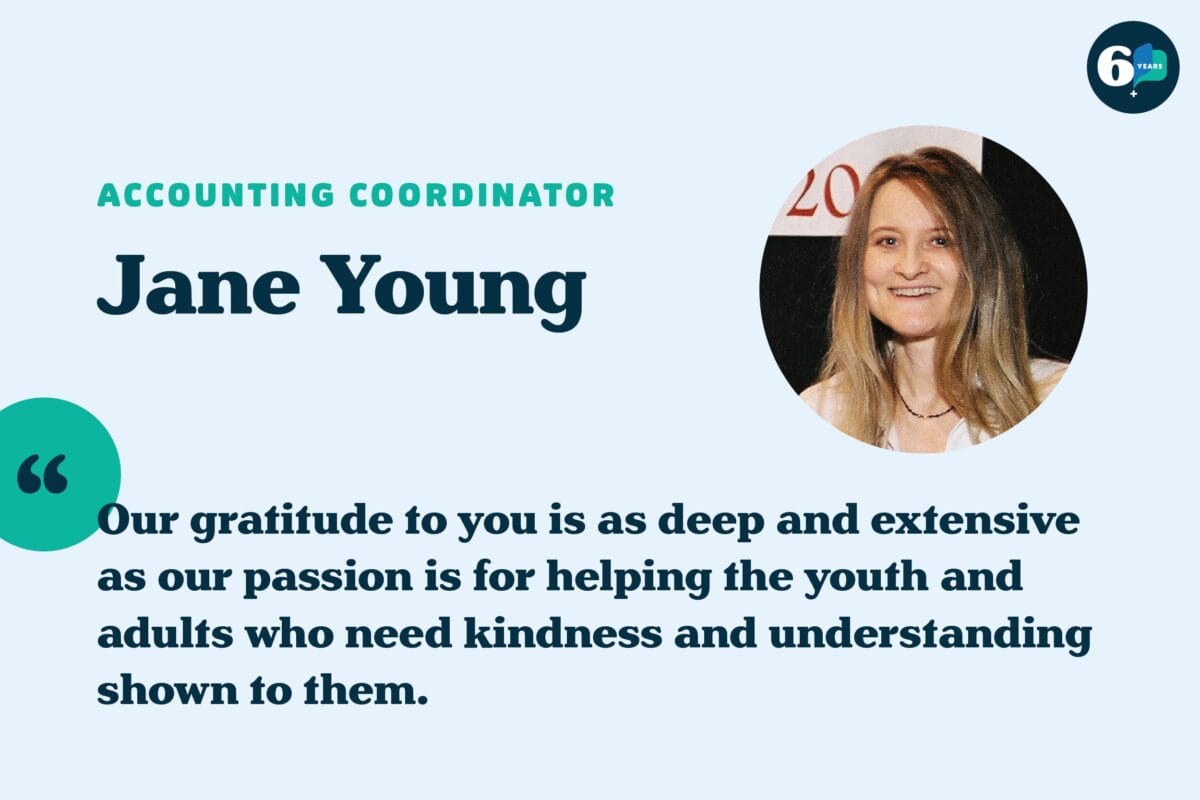
It may sound cliché to say that we could not do our work without you, but it’s true. Our gratitude to you is as deep and extensive as our passion is for helping the youth and adults who need kindness and understanding shown to them. Our bold mission to reduce and prevent the harms of alcohol and other drugs can only be advanced if it is undertaken as a team collaboration. By joining together, we change the lives of those we serve, and our own.
We are extremely grateful for the ability to serve more people in unique ways throughout the community and know that we cannot do this work alone. Our community partners, funders and the communities we serve are an instrumental part of PreventEd’s success in the Eastern Missouri region. We look forward to finding more ways to connect and expand access to resources in the years to come.